
Bridging the crescent and the pearl: A Strategic guide to Hong Kong Islamic business relations
—–
Long before Hong Kong became one of the world’s leading financial centers, it was a quiet coastal settlement of only a few thousand farmers, fishermen, and Hakka villagers. However, even in those early years, before Hong Kong Island was ceded to Britain in 1841, the city had already begun to reach out to the wider Islamic world through maritime trade.
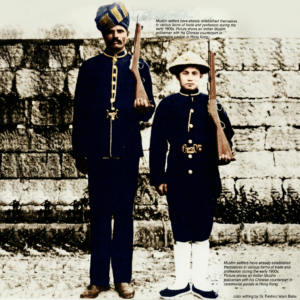 One of the earliest Muslim connections to Hong Kong came by sea. Before the British East India Company fully established Hong Kong as a colonial port, Muslim seamen were already sailing between India, China, Southeast Asia, and the Middle East. Many of these sailors were known as “Lascars,” a broad term used at the time for seamen from South Asia, the Indian Ocean, and other Muslim trading regions.
Historical accounts mention that these early Muslim arrivals came through the great maritime routes linking Calcutta, Bombay, Malabar, Canton, Macau, and Hong Kong. Some sailed on trading vessels and fast clippers connected to the China trade. One such vessel mentioned in the historical record was the Red Rover, built in Calcutta in 1829 and associated with early commercial voyages in the region.
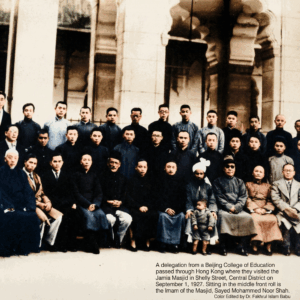 These Muslim pioneers were not from one single place. They came from many parts of the world: India, Bengal, Malabar, Yemen, Egypt, Abyssinia, Persia, Burma, Siam, the Malay world, the South China Sea region, and other ports connected by British and Asian trade. Some came as sailors, gunners, guards, artisans, laborers, traders, cooks, drivers, and others. Others passed through Hong Kong and eventually settled there as the port grew.
As Hong Kong developed into an important British seaport, more Muslim seamen and workers arrived. Many settled in Central, especially around Lower Lascar Row, which later became known locally as “Moro Kai.” The name reflected how local people identified Muslims and other seafaring communities from the Islamic world.
 In the beginning, the Muslim community had no proper mosque or formal religious facilities. They often gathered in open spaces and prayed together in the streets. Rather than being treated with hostility, these public prayers were generally observed with curiosity and respect by the local non-Muslim population. This early spirit of tolerance helped the Muslim community preserve its religious identity while integrating into Hong Kong’s urban life.
Over time, Muslims became deeply involved in the practical building of Hong Kong. They served as police constables, marine guards, correctional officers, dockyard guards, guards, road workers, government drivers, cooks, sweepers, traders, and other essential workers. Their contribution was not only cultural or religious; it was also civic and economic. They helped maintain order, protect the harbor, support public services, and strengthen the daily functioning of the young colony.
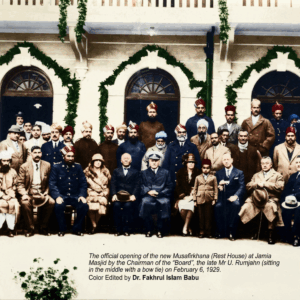
As the community grew, it became more organized. Muslim leaders gradually formed committees and associations to manage religious and community affairs. These efforts later contributed to the establishment of formal Muslim institutions, including the Board of Trustees in the early twentieth century. Historic mosques also served as important anchors for the community, especially Jamia Mosque, whose origins date back to 1849 and remains one of Hong Kong’s most meaningful Islamic landmarks.
Today, Hong Kong is home to more than 300,000 Muslims. The community includes long-established local Muslim families, South Asians, Indonesians, Malays, Middle Eastern professionals, African traders, mainland Chinese Muslims, and many others. This diversity is not a recent accident. It is part of a much older story of movement, trade, faith, and settlement.
However, despite this long history, many modern Hong Kong professionals still have limited knowledge of Islamic civilization and Muslim business culture. The mainstream education system gives little attention to Islamic history, and many people are unaware that Judaism, Christianity, and Islam share a common Abrahamic heritage. They are also often unfamiliar with the long history of trade and cultural exchange between China and the Islamic world.
This knowledge gap creates real business challenges. As Hong Kong seeks deeper participation in Belt and Road Initiative projects and attracts more investment from the Middle East and other Muslim-majority markets, cultural misunderstanding can easily become a commercial obstacle. Negotiations may stall over issues such as halal certification, Sharia-compliant finance, prayer arrangements, Ramadan schedules, food requirements, or different expectations around trust, honor, and relationship-building.
To overcome these challenges, Hong Kong business leaders can apply Professor Andrew Chan’s “Left-Right Circle Theory” as a practical framework for building stronger partnerships with the Islamic world. Instead of treating negotiation as a contest, the framework encourages both sides to understand each other deeply and search for shared value.
The Left Circle: Understanding the Counterpart
The first step is to understand the other side with sincerity and respect. For Hong Kong businesses, this means learning not only what Muslim partners require, but also why those requirements matter.
Sharia compliance, for example, is not simply a technical preference. In Islamic finance, it is a fundamental ethical and religious requirement. Similarly, halal certification is not just a label for food products. It reflects trust, cleanliness, accountability, and respect for religious duty.
Understanding the counterpart also requires historical empathy. Muslims are not newcomers to Hong Kong’s story. From the early lascars and seamen of Lower Lascar Row to the police constables, marine guards, and community leaders of later generations, Muslims have helped shape Hong Kong from its earliest colonial period. Remembering this history allows modern business leaders to approach Islamic partners not as strangers, but as part of a long-standing relationship.
The Right Circle: Assessing Hong Kong’s Own Strengths
The second step is for Hong Kong to understand its own capabilities. The city has many advantages: a trusted legal system, strong financial infrastructure, international banking expertise, world-class logistics, professional services, and close access to mainland China.
These strengths give Hong Kong a unique role as a bridge between Chinese enterprises and Islamic markets. The city can support cooperation in areas such as Islamic finance, halal logistics, infrastructure funding, arbitration, family office services, trade finance, tourism, food distribution, and professional consultancy.
However, capability also requires adaptability. If Hong Kong companies want to work successfully with Muslim partners, they must be willing to make practical adjustments. These may include providing halal food, respecting prayer times, avoiding unnecessary meetings during Friday prayers, adjusting schedules during Ramadan, and ensuring that Muslim staff, clients, and guests feel genuinely respected.
Small gestures can carry great meaning. In relationship-driven business cultures, respect is often measured not by speeches, but by thoughtful action.
The C Zone: Creating Shared Value
The “C Zone” is the space where the interests of both sides overlap. This is where real partnership happens.
For Hong Kong and the Islamic world, the opportunity is substantial. The global halal economy is worth trillions of dollars and continues to expand across food, finance, fashion, cosmetics, pharmaceuticals, tourism, logistics, and digital platforms.
Hong Kong can contribute by offering halal supply-chain management, certification support, logistics expertise, financial structuring, professional services, dispute resolution, and access to mainland Chinese production and consumer markets.
Islamic finance is another major opportunity. Instruments such as sukuk bonds can help Hong Kong attract Middle Eastern and Muslim-market capital while supporting infrastructure, green finance, and Belt and Road projects. By aligning commercial structures with Islamic ethical principles, Hong Kong can build greater confidence among investors seeking Sharia-compliant solutions.
The key is not to treat Islamic requirements as obstacles. They should be treated as design principles. When businesses build products and services around these principles from the beginning, they create offerings that are more trusted, more inclusive, and more sustainable.
The Deep Left Circle: Discovering Hidden Motivations
The deepest level of partnership goes beyond contracts, pricing, and legal terms. It requires understanding the emotional, cultural, and reputational concerns behind a negotiation.
Some Muslim partners may worry about being misunderstood, treated superficially, or approached only as a source of capital. Others may be concerned about religious integrity, family honor, community reputation, or the long-term consequences of a deal. These concerns may not always be spoken directly, but they strongly influence decision-making.
This is why active listening is essential. Hong Kong professionals should avoid rushing immediately into numbers and terms. They should take time to understand the people behind the deal: their values, pressures, obligations, and aspirations.
Trust is built when both sides feel seen and respected. In many Islamic business cultures, a contract may be written on paper, but the real partnership begins with personal confidence. Once that trust is established, cooperation can become much stronger and more resilient.
Hong Kong’s Opportunity as a Super-Connector
Hong Kong is uniquely positioned to become a premier super-connector between mainland China and the Islamic world. Its history already contains the foundation for this role. From the Muslim seamen who arrived through the old maritime routes, to the communities that gathered around Lower Lascar Row, to the establishment of mosques and formal trusteeship, Hong Kong has long carried an Islamic thread within its wider story.
The challenge now is to transform this historical connection into modern cultural intelligence. Hong Kong’s business leaders must move beyond superficial engagement and develop a deeper understanding of Islamic values, institutions, and commercial expectations.
If Hong Kong can combine its financial sophistication with genuine cultural respect, it can unlock major opportunities across the Middle East, Southeast Asia, South Asia, Africa, and Central Asia. More importantly, it can build partnerships based not only on profit, but also on trust, dignity, and shared purpose.
The early Muslims who came to Hong Kong were sailors, workers, guards, traders, artisans, and pioneers. They prayed in open spaces, served the city, and helped shape its development. Their story reminds us that Hong Kong’s relationship with the Islamic world is not new. It is part of the city’s own heritage.
By remembering that history and applying it wisely, Hong Kong can move from cultural blind spots to cultural confidence. When business leaders treat Islamic counterparts not as outsiders to be managed, but as partners with shared historical roots and common human values, they open the door to deeper trust, lasting cooperation, and truly meaningful win-win outcomes.
Writer:
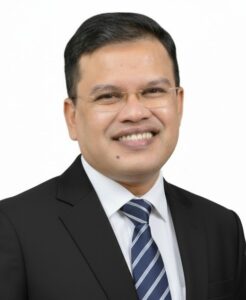
Dr. Fakhrul Islam Babu
Convening Committee Member (2026)
International Islamic Society, Hong Kong