
The End of Laissez-Faire: How Hong Kong’s First Five-Year Plan Rewrites Its Economic DNA
By: Dr. Fakhrul Islam Babu
For nearly a century, Hong Kong’s economic success was built on a foundation of “positive non-interventionism”—a term coined by former Financial Secretary Sir Philip Haddon-Cave. Under this doctrine, the government strictly provided the hardware—world-class infrastructure, low taxes, and a robust common-law system—while the free market was left entirely to operate the economic software. However, as global supply chains fracture, geopolitical fragmentation deepens, and technological advancement accelerates, relying solely on laissez-faire market forces is no longer enough to maintain a competitive edge.
On June 15, 2026, the Hong Kong Special Administrative Region (HKSAR) government crossed a historic threshold by launching a public consultation on its First Five-Year Plan for Economic and Social Development (2026–2030). This blueprint signals a definitive, institutional transition from a passive administrator to a proactive economic architect.
The Political Alignment:
Unified Messaging from Leadership
To understand the political weight and urgency behind this shift, it is essential to examine the coordinated messaging from local leadership and Beijing. This is not merely a policy pivot; it is a coordinated structural overhaul.
Chief Executive John Lee’s Strategic Vision:
Active Governance: Lee has explicitly declared that the era of passive administration is over, asserting that a modern government must “proactively shape and clear the path” for the economic landscape rather than waiting for market corrections.
National Alignment: The plan is explicitly synchronized with Beijing’s national 15th Five-Year Plan. Lee has framed this alignment as a historic necessity to secure Hong Kong’s long-term global competitiveness and avoid economic isolation.
The Northern Bridge: He highlighted the Northern Metropolis as the ultimate physical and legal bridge, designed to fuse Hong Kong’s international common law system with Shenzhen’s advanced technological and manufacturing prowess.
Financial Secretary Paul Chan’s Economic Directives:
The “Anchor Investor” Evolution: Chan noted a fundamental evolution in fiscal philosophy. The government will increasingly act as a primary anchor investor through vehicles such as the Hong Kong Investment Corporation (HKIC)—often dubbed Hong Kong’s “sovereign wealth fund”—to actively de-risk emerging industries and crowd in foreign venture capital.
Fiscal Prudence vs. Aggressive Investment: Chan faces the delicate balance of executing massive, state-backed industrial investments while adhering to Article 107 of the Basic Law, which mandates maintaining fiscal balance and avoiding deficits.
Green Finance Leadership: The plan establishes a structured timeline to cement the city’s transition into Asia’s premier green tech and sustainable finance hub, moving beyond traditional equities into carbon trading and ESG architecture.
Chief Secretary Eric Chan’s Societal Focus:
The Global Talent War: Recognizing acute demographic and professional shifts, Chan emphasized that the roadmap provides structural incentives—including targeted housing allowances and streamlined visa pathways—to attract and retain top-tier global professionals.
Academic Synergy: He pointed to the development of a new international university town in the Northern Metropolis, designed specifically to bridge the “valley of death” between academic research and commercial market application.
Livelihood Reassurance: To counter fears that industrial policy will cannibalize public funds, Chan has consistently reassured citizens that the wealth generated by these economic upgrades will be structurally channeled to address chronic housing and healthcare shortages.
Beijing’s Directives and Central Leadership Remarks:
The “Super Value-Adder” Mandate: Central officials from the Hong Kong and Macao Affairs Office (HKMAO) have praised the transition. They argue that being a passive “super-connector” (a mere middleman) is no longer viable; Hong Kong must become a “super value-adder” that actively modifies and enhances the technology and capital flowing through it.
Breaking Vested Interests: In a departure from historical deference to local property tycoons, mainland officials have signaled strong support for the HKSAR government to use its executive-led powers to overcome historical vested interests that have traditionally stalled land and housing reforms.
Preserving “Two Systems”: Crucially, Beijing repeatedly emphasizes that this integration relies entirely on preserving the city’s unique institutional advantages—its common-law system, freely convertible Hong Kong Dollar (HKD), and low taxes—which are vital to China’s broader national modernization.
The Four-Phase Roadmap (2026–2030):
The consultation document outlines a highly structured roadmap designed to bridge aggressive economic upgrading with tangible societal benefits, divided into four strategic pillars:
Phase 1: Technological and Economic Transformation
- The “AI+” Integration: Mass embedding of artificial intelligence and microelectronics across Hong Kong’s traditional strongholds—logistics, wealth management, and trade financing—to align with national “new productive forces” ambitions.
- Northern Metropolis Development: Transforming 30,000 hectares of land near the mainland border into a massive innovation and technology (I&T) hub, interfacing directly with the Futian and Luohu districts of Shenzhen.
- Talent and Education Triad: Establishing an international university town to house satellite campuses of prestigious global and local universities, focusing heavily on STEM and proprietary R&D commercialization.
Phase 2: Social Welfare and Livelihood Enhancements
- Housing Supply Continuity: Mapping out rigid infrastructure lines and optimizing the public-to-subsidized housing ladder to dismantle systemic land deficits and address flat crises permanently.
- Socio-Economic Safety Nets: Securing proactive, multi-year funding visions for healthcare, elderly care, and cross-border medical welfare, allowing Hong Kong retirees in the Greater Bay Area to utilize local medical vouchers seamlessly.
- Workforce Futureproofing: Rolling out subsidized “AI Training for All” initiatives through institutions like the Vocational Training Council (VTC) to retrain working professionals against technological displacement.
Phase 3: Strategic National and Regional Integration
- Global Hub Reinforcement: Cementing Hong Kong’s status as the world’s preeminent offshore Renminbi (RMB) hub and a top-tier international center for aviation and maritime trade.
- New Supply Chain Ecosystem: Transitioning from a simple freight-forwarding port into a high-value-added supply-chain management service hub, handling global commodity trading, risk assessment, and intellectual property (IP) litigation.
- Greater Bay Area (GBA) Engine: Deepening industrial, economic, and logistical linkages to ensure Hong Kong acts as the primary international gateway for the broader Guangdong-Hong Kong-Macao Greater Bay Area.
Phase 4: Institutional Governance and Market Stability
- Policy Paradigm Shift: Moving toward an explicit industrial policy framework—like Western legislative acts like the U.S. CHIPS Act or the EU’s green transition directives—designed to protect and subsidize strategic industries.
- Macro Strategic Navigation: Utilizing the five-year plan as a top-level chart to outline visions and major initiatives that successfully bridge standard, short-term political and budgetary cycles.
- Long-Term Planning Predictability: Providing multinational corporations, venture capitalists, and local developers with vital regulatory predictability in an otherwise highly volatile global economy.
Critical Debates and Open Questions in the Public Consultation
As the public consultation phase runs through August 14, 2026, the Legislative Council, business chambers, and academic circles are actively debating several friction points:
The Accountability Dilemma (Binding KPIs): The most pressing question is whether the finalized blueprint will introduce legally or politically binding Key Performance Indicators (KPIs) for government bureaus. Lawmakers are asking: What happens if the Northern Metropolis land resumption falls behind schedule, or if the “AI+” integration fails to yield measurable productivity gains by 2028?
The Crowding-Out Effect: Local economic analysts have raised concerns that aggressive, state-backed investments via the HKIC could inadvertently “crowd out” private venture capital or lead to inefficient capital allocation by picking market “winners and losers” instead of letting organic market forces do so.
The Capital Bottleneck: With property market revenues stabilizing at lower-than-historical baselines and infrastructure costs rising, the government must clarify how it will fund these massive parallel transitions without depleting fiscal reserves or over-relying on large-scale bond issuance.
When the formal document is officially published in the third quarter of 2026, it will permanently cement a new era for Hong Kong. The city will no longer leave its economic destiny entirely to the invisible hand of the market; instead, it is actively taking the wheel to navigate an increasingly complex global landscape.
Info Sources:
- HKSAR Government Consultation Paper: Public Consultation Document on the First Five-Year Plan for Economic and Social Development of Hong Kong (2026–2030), Financial Services and the Treasury Bureau, issued June 15, 2026.
- Legislative Council Panel on Economic Development: Minutes on the Transition to Active Governance and the Evaluation of Institutional Capital Vehicles (HKIC), May 2026.
- Hong Kong Investment Corporation (HKIC) Framework Report: Leveraging State-Backed Anchor Investments for Strategic Tech Clusters, Hong Kong, June 2026.
- Institute of Chinese Economy, HKU: From Super-Connector to Super Value-Adder: Assessing Hong Kong’s Structural Evolution under the National 15th Five-Year Plan, June 2026.
Writer:
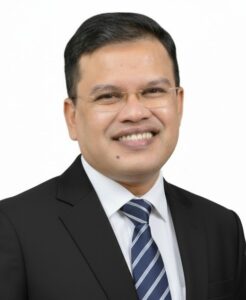
Dr. Fakhrul Islam Babu
President
China Bangladesh Friendship Center-CBFC