
Silk Road Access to Hong Kong: Unlocking Halal Opportunities through the Belt and Road Initiative
-By Dr. Islam Muhammad Fakhrul Babu 孫逸仙
When discussing the Belt and Road Initiative, or BRI, conversations often focus on mega-infrastructure: ports, railways, highways, bridges and logistics corridors. These projects are important, but they are only one part of the story. The deeper value of the modern Silk Road lies in connectivity — the movement of people, capital, goods, culture, knowledge and trust across borders.
For Hong Kong, this connectivity represents a powerful opportunity. Our city has long been known as a super-connector between Mainland China and the world. Today, Hong Kong has the chance to strengthen that role by becoming a trusted bridge between China, Asia and Muslim-majority markets across Southeast Asia, the Middle East, Central Asia and beyond.
The most important message for local businesses is simple: we do not need to leave Hong Kong to benefit from the Belt and Road. The Silk Road is already arriving here through tourists, investors, traders, students, corporate delegates, families and consumers from Muslim-majority economies. If Hong Kong can better understand and serve these communities, we can access global opportunities from home.
Understanding Islam, Muslim and Halal
Before discussing business opportunities, it is important to clarify three terms that are often confused.
Islam: Islam is the religion and way of life followed by Muslims worldwide.
Muslim: A Muslim is a person who follows Islam. Muslims are not one single race, nationality or culture. They include Arabs, Malays, Indonesians, Pakistanis, Bangladeshis, Turks, Africans, Central Asians, Europeans and Chinese Muslims, among many others.
Halal: Halal is an Arabic word meaning “permissible.” In business, it most commonly relates to food, but it extends far beyond simply avoiding pork and alcohol. It also involves sourcing, ingredients, preparation, storage, transportation, hygiene, service and prevention of cross-contamination.
For Muslim consumers, halal is not merely a religious label. It represents trust, safety, quality, ethics and respect. For businesses, halal readiness can become a powerful gateway to new customers and new markets.
Why the Halal Economy Matters to Hong Kong
The global halal economy is growing rapidly. It covers food and beverage, tourism, hospitality, cosmetics, pharmaceuticals, modest fashion, logistics, Islamic finance and digital lifestyle services. Many of the world’s largest Muslim populations are located in Belt and Road markets, including Indonesia, Malaysia, Pakistan, Bangladesh, Turkey, Saudi Arabia, the UAE, Qatar and other Gulf and Central Asian economies.
Hong Kong is well positioned to serve this market because of its unique strengths. The city has trusted food safety standards, efficient logistics, strong cold-chain capabilities, one of the world’s leading air cargo hubs, deep financial markets, international professional services and a strong gateway role into the Greater Bay Area and Mainland China.
Recent developments have made this opportunity even more relevant. Hong Kong has been actively deepening business and financial engagement with the Middle East, especially the Gulf region. High-level visits, stronger ties with Saudi Arabia and the UAE, Saudi-linked exchange-traded fund products in Hong Kong’s capital market, and growing interest from Middle Eastern investors all indicate that the city’s relationship with the Muslim world is becoming more strategic.
This financial and business pivot complements the halal economy. Tourism, trade, food supply, logistics, Islamic finance, family offices, exhibitions and professional services are not separate opportunities. Together, they form part of the same Belt and Road connectivity story.
Tourism: The Opportunity Is Already Arriving
One of the clearest opportunities is inbound tourism. Hong Kong is seeing growing interest from visitors from the Middle East, Southeast Asia and other Muslim-majority markets. Many of these travelers are family-oriented, quality-conscious and high-spending. They are interested in premium shopping, theme parks, cultural experiences, medical services, business networking, exhibitions and luxury hospitality.
However, their travel decisions often depend on one practical question: how easy is it to find halal food and Muslim-friendly facilities?
For Muslim travelers, a destination becomes more attractive when halal dining is accessible, prayer facilities are available, hotel staff understand basic needs, and information is easy to find. This does not require every business to become fully halal-certified immediately. But it does require awareness, sincerity, and practical steps.
The Hong Kong Tourism Board and industry partners have already been promoting Muslim-friendly tourism by encouraging hotels, restaurants, attractions, and frontline staff to understand the needs of Muslim visitors better. This direction is important because Muslim-friendly service is not only about facilities but also about hospitality and confidence.
Hong Kong’s Evolving Halal Ecosystem
Hong Kong is not starting from zero. According to information from the Incorporated Trustees of the Islamic Community Fund of Hong Kong, commonly known as the Board of Trustees and the halal certification-issuing authority, the halal certification landscape currently includes around 234 halal retail outlets, including those in Macau.
In addition, there are central kitchens that may not appear on the public retail outlet list, as well as more than 70 halal-certified factories supporting food production and supply. Altogether, around 313 halal certificates have been issued.
This figure should be understood as dynamic. Halal certification is an ongoing process. Certificates expire, are renewed, updated, or changed in response to business operations, compliance standards, and market demand. Therefore, the number is not fixed. In fact, this movement is a positive sign, as it shows that the halal market is active, responsive, and developing.
Hong Kong also has 60+ Muslim-friendly hotels and other recognized hotel properties offering varying levels of Muslim-friendly services. These may include prayer mats, qibla direction indicators, halal dining support, information about nearby mosques, Muslim-friendly room arrangements, or trained frontline staff.
These numbers show that Hong Kong already has a foundation. The next step is to scale up quality, visibility, and consistency.
Certification Is Trust, Not Just a Logo
Halal certification is often misunderstood as a simple label. In reality, it is a trust-building system. In food-related businesses, certification may involve checking ingredients, suppliers, production methods, kitchen procedures, storage, transportation, cleaning practices, slaughtering methods, and cross-contamination prevention.
For a restaurant, hotel, airline caterer, factory or central kitchen, halal certification requires discipline and proper management. Staff must understand the requirements. Suppliers must be reliable. Procedures must be documented. The whole chain must protect consumer confidence.
For Muslim customers, this trust is essential. For businesses, it becomes a commercial advantage. A halal-certified company can serve local Muslim residents, inbound tourists, corporate events, airlines, hotels, schools, exhibitions, overseas buyers and Belt and Road markets.
In this sense, halal certification is not only a religious requirement. It is a business passport.
Sector Opportunities: Food, Tourism, MICE and Retail
Food and beverage is the most visible opportunity. Muslim travelers do not come to Hong Kong only to eat international food. Many want to experience authentic local flavors — noodles, pastries, dim sum-style items, snacks, desserts and festive gifts — but they need to enjoy them with confidence.
Premium brands such as 皇玥 / Imperial Patisserie show how halal-certified bakery and gift products can attract Muslim tourists, corporate buyers and overseas markets. Beautifully packaged Hong Kong products can become ideal gifts for visitors from Muslim-majority countries if they meet halal requirements.
Local restaurants such as 十三姨 Noodle Shop show another possibility. When authentic Hong Kong-style food is adapted to halal standards, it offers Muslim visitors a memorable experience: the chance to enjoy local culture without compromising their faith.
Tourism agencies also have a major role. Companies such as UNI Asia Travel can design Muslim-friendly itineraries that include halal meals, prayer-time planning, mosque visits, family-friendly attractions, and shopping arrangements. This is more than ordinary sightseeing. It is about understanding the full journey of Muslim travelers from arrival to departure.
The MICE sector — meetings, incentives, conferences and exhibitions — is another important area. Hong Kong is a major business events hub. As more delegates arrive from the Middle East, Southeast Asia and other Belt and Road regions, convention venues, hotels, caterers and event organizers that can provide halal food and Muslim-friendly arrangements will have a clear competitive advantage.
Retail and lifestyle businesses can also benefit. Cosmetics, health products, fashion, gifts, e-commerce and logistics can all connect with Muslim consumer needs. Halal is not limited to restaurants; it is part of a broader lifestyle economy.
The Greater Bay Area Gateway
Hong Kong’s role becomes even more powerful when connected with the Greater Bay Area. Mainland China has strong manufacturing capacity across food production, consumer goods, cosmetics, health products, and logistics. Many companies in the Greater Bay Area are interested in expanding into overseas markets, including ASEAN, the Middle East, and other Belt and Road economies.
Hong Kong can act as the international marketing, compliance, financing, testing, branding and distribution platform for these companies. For GBA manufacturers seeking to export halal-certified products to Muslim-majority markets, Hong Kong can offer professional services, certification guidance, trade finance, international exhibitions, logistics support, and global credibility.
At the same time, Hong Kong can help overseas halal brands enter Mainland China and the Greater Bay Area. This two-way gateway role is one of Hong Kong’s greatest strengths.
Learning from Malaysia and Singapore, Building the Hong Kong Model
Hong Kong can learn from regional examples. Malaysia has developed one of the world’s most comprehensive halal ecosystems, with strong government support, certification, education, branding and export promotion. Singapore has shown how a compact international city can provide clear halal standards, strong training and Muslim-friendly hospitality.
However, Hong Kong does not need to copy either model in its entirety. Hong Kong’s path should reflect its own strengths: commercial efficiency, international finance, logistics excellence, legal reliability, tourism appeal and gateway access to Mainland China.
The “Hong Kong model” should be practical, market-driven and internationally connected. It should support SMEs, encourage staff training, improve public information, strengthen hotel and restaurant readiness, connect halal supply chains, and more actively promote Hong Kong in Muslim-majority markets.
Government, business chambers, tourism bodies, Muslim organizations, certification authorities, hotels, restaurants, manufacturers, and community leaders all have a role to play. Halal development works best when it is built on cooperation.
The Main Message: Stay Local, Go Global
The core message for Hong Kong’s business community is clear: you do not need to go overseas first to capture Belt and Road opportunities. Many of these opportunities are already coming to Hong Kong.
Muslim tourists are visiting. Middle Eastern investors are exploring. Belt and Road companies are attending exhibitions. Students and professionals from Muslim-majority economies are living and working here. Families are shopping, dining and traveling here. The market is already at our doorstep.
By investing in halal readiness, cultural literacy and Muslim-friendly hospitality, Hong Kong businesses can serve this market with confidence. This is not just about changing a menu or adding a sign. It is about building trust, showing respect and creating a better customer experience.
Halal business is not only about profit. It strengthens Hong Kong’s inclusiveness, supports participation by ethnic minorities, creates new opportunities for SMEs, and enhances the city’s image as an open international hub.
The Belt and Road Initiative brings the world closer to Hong Kong. Halal readiness allows Hong Kong to welcome that world with trust, respect and opportunity.
The modern Silk Road is no longer just a distant route. It is increasingly arriving in Hong Kong. Our task is simple: be ready, be respectful and be open for business.
Writer:
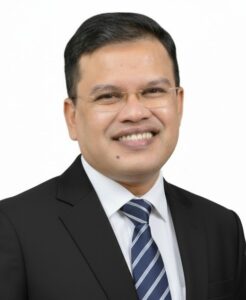
Dr. Fakhrul Islam Babu
President
China Bangladesh Friendship Center-CBFC