
The Heart and the Hands: Why Hong Kong needs unpaid Community Leaders in advisory committees
-by Dr. Fakhrul Islam Babu
In the pursuit of a better society, Hong Kong often frames social contribution as a choice between two types of people: the community leader or social activist who serves without salary, and the paid social-sector professional whose job is to design and deliver services within formal institutions. However, society does not need to choose. It needs both the heart that stays close to people’s daily struggles and the hands that can turn public goals into safe, workable systems.
Paid social-sector workers can add real value. They usually bring structured assessment, risk management, program design, safeguarding standards, and the discipline of documentation and evaluation. In complex social issues, these skills help translate compassion into implementation—so policies are not only inspiring, but also measurable, lawful, and safe for the people they aim to protect.
However, unpaid community leaders and volunteer activists are often the first to see what is breaking in real life. They are the organizers who keep mutual-aid networks alive, the advocates who listen when residents feel unheard, and the builders of trust in communities that may avoid formal services. Their “expertise” is not a certificate—it is a record of presence, relationships, and accountability to neighbours rather than to payrolls. They know which help reaches people and which help stops at the doorstep of bureaucracy.
The problem is that many people increasingly observe an imbalance in how advisory committees are formed. Too often, committees rely on a small circle of salaried voices—people who already sit on multiple boards, attend countless meetings, and move within the same professional networks. Even when these individuals are capable and well-meaning, the structure can lead to fatigue and repetition. Overloaded members have less time to prepare deeply, less space to consult widely, and less willingness to challenge the room. Committees can then drift into a “common face” culture—safe consensus, familiar viewpoints, and limited connection to fast-changing community realities.
This imbalance can also create a quieter, more serious problem: independence. Salaried participants may feel pressure—spoken or unspoken—to protect relationships, preserve reputation, or avoid statements that could embarrass an employer or threaten funding channels. In such settings, the advice given may become careful rather than courageous, and “what is acceptable to say” can replace “what must be said.” When that happens, an advisory committee risks prioritizing institutional comfort over the broader public interest.
There is also a fairness issue in representation. Sometimes, nomination practices favour voices that can speak Cantonese, as if language alone determines legitimacy. However, Hong Kong is officially bilingual, and English remains an official language with deep roots in education, law, business, and international engagement. Many effective community leaders communicate in English (and often other languages) and serve diverse communities, including migrants, ethnic minorities, and cross-border families. If advisory committees narrow participation based on language preference rather than community contribution, the result is not only unfair—it is poor policy design, as it filters out perspectives essential to understanding Hong Kong as it actually is.
Most importantly, unpaid community leaders often carry the clearest picture of “root needs”—the problems beneath the surface that do not always show up in reports or meeting papers. They see the gaps between policy intention and lived experience: who cannot access services, who is silently excluded, and what families do to survive when systems do not fit their realities. Meanwhile, salaried advocates—busy inside professional circles—may unintentionally become distant from those daily pressures. This is not a moral failure; it is a predictable result of time constraints, institutional routines, and incentives that reward compliance more than truth-telling.
If Hong Kong wants advisory committees that are credible, future-ready, and genuinely community-informed, it must honour voluntary community leaders not just with praise, but with real seats and real influence. The goal is not to replace paid expertise; it is to correct the imbalance by widening participation, reducing over-reliance on repeat appointees, and ensuring that committees hear from people whose primary accountability is to the community—not to an employer, not to a funding ecosystem, and not to a familiar circle.
A strong advisory body should look like a true partnership: paid professionals contribute method and safeguards; unpaid community leaders contribute lived reality, trust, and moral clarity. When the heart and the hands work together—and when government stops recycling the same salaried faces while overlooking selfless community builders—policy becomes more honest, more practical, and more worthy of public trust.
Writer-
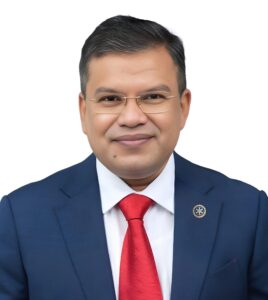
Dr. Fakhrul Islam Babu 孫逸仙
President
China Bangladesh Friendship Center-CBFC and
Asian Club Limited