
Competing narratives in Bangladesh’s political history
– by Dr. Fakhrul Islam Babu
Bangladesh’s political history unfolds as a sequence of power shifts, with one era ending and the next beginning with a leadership transition. The story begins in the mid‑20th century, when questions of language and identity first took on a distinctly political character among Bengalis in British India and, later, in Pakistan. The demand that Bengali be recognized as a state language and that the political and economic interests of East Pakistan receive due recognition gradually evolved into a broader struggle for autonomy within a federal structure.
Sheikh Mujibur Rahman—later revered as Bangabandhu, “Friend of Bengal”—emerged from this context. Beginning as a student activist, he became a central organizer who consistently championed Bengali interests in a state dominated by West Pakistan. In 1949, he co‑founded the Awami League to press for autonomy and democracy for East Pakistan. Over the following years, he helped lead the language movement and articulate the grievances of a region that produced most of Pakistan’s export earnings yet saw relatively little investment or representation.
In 1966, Mujib presented his Six‑Point Programme, a detailed set of demands for extensive autonomy for East Pakistan within a loose federation. This initiative served as both a negotiating document and a manifesto, crystallizing a distinct sense of Bengali nationalism. The central government saw it as a threat to unity; Mujib and other Awami League leaders were harassed, jailed, and vilified as separatists. However, the Six‑Point Programme resonated deeply with a population that increasingly felt marginalized by West Pakistani elites.
The turning point came with the 1970 general election. The Awami League, under Mujib’s leadership, won an overwhelming majority of seats—enough to form the government of all Pakistan under the existing constitutional framework. Expectations ran high that democratic norms and the electoral mandate would be respected. Instead, negotiations stalled, the transfer of power was delayed, and mistrust deepened. On 7 March 1971, Mujib delivered a historic speech in Dhaka, declaring that the struggle now was for emancipation and independence in all but name. When the central authorities launched a military crackdown on 25 March, Mujib was arrested and flown to West Pakistan, and the Liberation War began.
The war ended on 16 December 1971 with Pakistan’s defeat and the emergence of Bangladesh as a sovereign state. Mujib was released from prison and returned to a hero’s welcome in January 1972, first as president and later as prime minister under a new parliamentary system. The 1972 constitution, drafted and adopted within that first year, anchored the new state in four principles: Democracy, Socialism, Nationalism, and Secularism. These pillars—often collectively linked to Mujib’s ideological vision—were intended to provide an inclusive civic foundation after a brutal conflict marked by communal violence and state repression.
Early state‑building tasks were enormous: rebuilding infrastructure after war and famine, integrating freedom fighters into civilian life and state institutions, and asserting Bangladesh’s place in a world divided by the Cold War. Mujib’s government sought international recognition, joined the United Nations and the Commonwealth, and attempted to build a mixed economy with a strong public sector. Supporters emphasize these efforts as indispensable to consolidating sovereignty and crafting a national identity centred on language, culture, and anti‑colonial struggle.
At the same time, critics highlight serious governance challenges. Nationalization policies and administrative centralization were blamed for inefficiencies and shortages. Political opposition was restricted; in 1975, a move toward a one‑party presidential system under BAKSAL (Bangladesh Krishak Sramik Awami League) raised concerns that the state was drifting away from pluralist democracy. Allegations of human rights abuses and heavy‑handed security measures accumulated. The period thus remains the subject of contested memory: one strand foregrounds Bangabandhu as the architect of independence and the foundational constitution; another underscores the risks that accompanied the concentration of power in a fragile, traumatized state.
This first era ended abruptly on 15 August 1975, when Mujib and most of his family were assassinated in a coup carried out by a group of army officers. Only a few close relatives survived. The killings not only decapitated the country’s founding leadership but also inaugurated a cycle of coups, counter‑coups, and rearrangements in which the military and segments of the bureaucracy played decisive roles. Legal protections for the assassins, later termed “indemnity,” and the shifting official narratives of the killings reflected the intensity of the political struggle over how this foundational rupture would be remembered.
In the years that followed, Ziaur Rahman, a decorated sector commander from the Liberation War, steadily rose in prominence. Initially a mid‑ranking officer who proclaimed Bangladesh’s independence over the radio from Chittagong in March 1971, Zia was drawn into post‑1975 power struggles as governments formed and fell with rapid succession. By late 1975 and 1976, he emerged as the central military figure, assuming the role of Chief Martial Law Administrator and, eventually, the presidency.
Zia presented himself as a stabilizing force after years of turmoil. He moved to normalize politics by lifting some bans, re‑legalizing parties, and organizing referendums and elections designed to confer popular legitimacy on his rule. In 1978, he founded the Bangladesh Nationalist Party (BNP), positioning it as a right‑of‑centre alternative to the Awami League. He promoted the concept of “Bangladeshi nationalism,” emphasizing territorial identity, Islamic cultural heritage, and a broader, less India‑centric foreign policy orientation, in contrast to the earlier emphasis on Bengali ethno‑linguistic nationalism.
Supporters credit Zia with restoring a measure of discipline in the armed forces, opening economic space for private enterprise, and reintroducing multiparty competition, which evolved into a relatively stable two‑party system. Critics, however, view his tenure as one in which military influence was entrenched under a civilian veneer. They point to the use of martial law, summary trials, and the execution of political opponents and military rivals—most notably Colonel Abu Taher—as evidence of coercive consolidation. Zia’s constitutional changes also altered the ideological complexion of the state, diluting or reinterpreting certain secular provisions of the 1972 charter.
On 30 May 1981, Zia was assassinated in Chattogram in another military‑linked plot. His death reopened questions about succession and stability, as factions within the armed forces and political elites vied for control. In 1982, General Hussain Muhammad Ershad, then Army Chief, staged a bloodless coup, ousting the elected president and imposing martial law. Zia’s trajectory thus linked the foundational war generation to a second phase in which military officers not only influenced but directly occupied the apex of state power.
Ershad’s rule, which lasted until 1990, is commonly characterized as a period of military‑backed authoritarianism coupled with attempts at institutional engineering. He formed the Jatiya Party (JP) to provide a political base and organized parliamentary and presidential elections that opposition parties denounced as flawed. However, his regime also undertook administrative reforms, experimented with decentralization through the upazila system, and pursued economic liberalization policies that, according to some analysts, laid the groundwork for subsequent growth. To solidify support among religious conservatives, Ershad made Islam the state religion through constitutional amendment, a move that continues to influence debates about secularism and minority rights.
Opposition to Ershad coalesced over time, cutting across ideological lines. A broad alliance, including both the Awami League and the BNP, coordinated street protests, strikes, and boycotts. Public unrest escalated in the late 1980s, with students, professional groups, and civil society organizations demanding an end to military rule and restoration of full parliamentary democracy. Facing a nationwide uprising and loss of elite backing, Ershad resigned on 6 December 1990. A non‑party caretaker administration took over to supervise fresh elections, instituting a model of interim governance that would shape Bangladeshi electoral politics for decades.
The 1991 election marked the formal return to parliamentary democracy. Under Khaleda Zia, widow of Ziaur Rahman and leader of the BNP, the country amended its constitution to shift executive power back from a presidential to a parliamentary system. Her government initiated structural adjustment and liberalization measures, expanded private-sector roles, and sought to modernize specific sectors, including education. Nevertheless, this period also saw intense rivalry with the Awami League, led by Sheikh Hasina, Bangabandhu’s daughter. Hartals (general strikes), parliamentary boycotts, and street confrontations became common tactics, thereby embedding a confrontational political style that has remained a hallmark of the system.
In 1996, following a disputed election and sustained protests, a revised caretaker mechanism, overseen by a non‑party interim government, was implemented. Fresh elections brought Sheikh Hasina to power. Her first term saw notable achievements, including the Ganges Water Sharing Treaty with India and the Chittagong Hill Tracts Peace Accord. Critics, however, argued that patronage, politicization of the administration, and human‑rights concerns persisted. When Khaleda Zia returned to office in the 2001 election, the pendulum swung again. International observers noted irregularities and rising violence, while perceptions of corruption soared; Bangladesh repeatedly ranked at or near the bottom of global corruption indices during this period.
Tensions escalated in 2006–2007, when disputes over election administration and caretaker leadership precipitated a full‑blown political crisis. Amid mounting violence, a military‑backed caretaker government took control in January 2007, postponing elections and launching an aggressive anti‑corruption drive that targeted figures across the political spectrum, including both Khaleda Zia and Sheikh Hasina. While some civil‑society voices welcomed efforts to curb entrenched graft, others warned that due process, civil liberties, and democratic norms were being subordinated to a technocratic and security‑driven agenda.
Elections finally held in December 2008 returned Hasina to power with a landslide majority. Over the next decade and a half, Bangladesh experienced sustained economic growth, expansion of manufacturing (especially garments), large‑scale infrastructure projects such as the Padma Bridge, and significant improvements in some social indicators. Supporters point to these achievements as evidence of effective developmental leadership. At the same time, domestic and international human‑rights organizations, opposition parties, and independent media documented rising concerns about enforced disappearances, extrajudicial killings, shrinking space for dissent, and increasingly controlled electoral processes. Elections in 2014 and 2018 were boycotted or marred by major opposition parties, who argued that the abolition of the earlier caretaker system had undermined trust in the electoral process.
After the 2024 general election, underlying tensions had built up beneath the surface of apparent macroeconomic success. Student protests over job quotas and inequality evolved into broader demonstrations against perceived authoritarianism, corruption, and lack of accountability. Violence during crackdowns, including deaths and injuries among protesters, intensified calls both domestically and abroad for a political reset. Hasina eventually left the country; legal proceedings against her later unfolded in absentia, with supporters condemning them as politically motivated and critics framing them as overdue accountability.
In this charged context, an interim government headed by Nobel laureate Muhammad Yunus took office, backed by sections of the protest leadership and parts of the establishment. Its publicly stated mandate was to restore order, implement institutional reforms, and prepare the ground for a credible election. The administration announced investigations into major infrastructure and energy projects, enhanced formal powers for bodies such as the National Human Rights Commission, and introduced measures to increase police accountability, including pilot deployments of body‑worn cameras. It also addressed practical governance challenges, such as traffic management in Dhaka, and explored agreements with providers like Starlink to improve internet access.
At the same time, the Yunus period has drawn substantial controversy. Courts under the interim government tried and sentenced key figures from the previous regime, including Hasina, in proceedings that supporters describe as justice and critics denounce as victor’s justice. Questions have been raised about judicial independence, standards of evidence, and the use of special tribunals. Allegations of selective prosecution—focused mainly on one side of the prior political divide—have fueled concerns that old patterns of politically driven cases are being reproduced under a new banner.
Another area of intense debate is the renewed space for Jamaat‑e‑Islami Bangladesh (JIB) and other Islamist forces. Banned and marginalized under the Awami League government, JIB and its student wing, Islami Chhatra Shibir, were allowed back into formal politics under the interim administration. Supporters of this move argue that banning parties is incompatible with inclusive democracy and that grievances are better managed within the political system than outside it. Critics, however, see it as a calculated attempt to consolidate conservative and Islamist constituencies and to weaken secular and liberation‑war‑oriented forces.
Some sources and commentators claim that Yunus has effectively become a “puppet” influenced by JIB‑linked networks, citing his presence at events where Islamist rhetoric is prominent and his apparent openness to constitutional adjustments that would give greater formal space to religious law in certain areas. These claims are vigorously contested and difficult to verify independently, but they highlight the perception among segments of the public that the ideological balance achieved after 1971 may be shifting again. Accusations have also been made about the “infiltration” of state machinery, with secular or liberation‑war‑aligned officials allegedly being sidelined in favor of individuals seen as more sympathetic to Islamist or conservative currents.
JIB’s well‑known financial and social infrastructure—banks, charities, educational institutions, and business networks—further complicates the picture. Analysts have long referred to this as a “parallel economy” that enables the party and its allies to mobilize resources independently of formal political power. The re‑entry of such networks into mainstream politics during the interim period, according to critics, poses a risk that institutional reforms could entrench, rather than dilute, specific ideological agendas.
The broader political field remains fragmented and tense. The BNP, whose longtime leader, Khaleda Zia, has faced severe health crises and prolonged legal battles, has signaled its readiness to participate in elections under the interim arrangement, while also expressing concern about her condition and the fairness of the process. Other parties, including smaller youth‑led formations such as the NCP and various Islamist and conservative outfits, are vying for influence in a landscape where the Awami League has been formally banned pending legal proceedings against its top leadership. These have disrupted the duopolistic structure that long defined Bangladeshi politics, with uncertain implications for future stability.
Violence and security concerns loom over the run‑up to the next polls, tentatively scheduled for early 2026, alongside a referendum on a “July Charter” of institutional reforms. Disputes over the timing and sequencing of the election and referendum, the legal status of key parties, and the role of the military and security forces in guaranteeing—or undermining—fair competition all contribute to an atmosphere of volatility. The international community, including regional neighbors and global partners, now weighs Bangladesh’s internal choices through the lenses of economic interdependence, migration, security, and humanitarian obligations such as the protracted Rohingya refugee crisis.
Across these eras—from Bangabandhu’s foundational leadership through Ziaur Rahman’s recalibration of identity and politics, Ershad’s military rule and managed re‑democratization, the alternating tenures of Khaleda Zia and Sheikh Hasina, and the contentious interim stewardship under Muhammad Yunus—the core themes recur: competing claims to embody the “true” spirit of 1971, differing visions of nationalism and secularism, the recurring role of the military and bureaucracy in civilian politics, and unresolved questions about how to build institutions capable of withstanding partisan pressure.
A neutral observer, looking across this arc, will see not a single, clean narrative but a series of overlapping, often contradictory stories. Each leadership cohort frames its predecessor as conspiratorial, corrupt, or traitorous, while presenting its own project as corrective or redemptive. Untangling these claims requires careful attention to chronology, legal records, policy outcomes, and the lived experience of citizens—not only to the rhetoric of those competing for power.
In the Pakistan era, authorities in West Pakistan alleged that Sheikh Mujibur Rahman was conspiring to break up the country. These official claims were part of a broader state narrative at the time and are contrasted in later histories and by Bengali-focused perspectives. After independence, many accounts contended that Rahman did not seek independence in the conventional sense, nor did he participate in armed conflict as some narratives claim. Nevertheless, he is widely revered as the Father of the Nation, while other voices describe him as having pursued a plan to surrender sovereignty to India through conspiracies; such claims have been the subject of intense debate and political contention.
Ziaur Rahman has been described by some as a conspirator and alleged mastermind behind Sheikh Mujibur Rahman’s assassination, with numerous army officers implicated in forceful power shifts; interpretations of these events vary, and the question of culpability remains contested. It is alleged that Ershad’s actions led to the removal of Zia, that power was acquired through conspiracies, and that Ershad ultimately died after years of imprisonment. In the 1990s, circulating rumors suggested that if Hasina came to power, the country would be sold to India, accompanied by alarmist signals from mosques. Conversely, some asserted that Khaleda Zia, if empowered, would transform the country into a haven for terrorists and potentially align it with Pakistan. Khaleda Zia herself claimed that Hasina was conspiring to sell the country, while Hasina asserted that Khaleda Zia sought to turn the nation into a terrorist stronghold. Each side characterized the other as uneducated, yet both were widely regarded as exemplary leaders based on their political platforms and party leadership.
Public discourse at times described both leaders as contributing to a record of corruption; supporters and critics alike have contested broad characterizations of governance. Allegations linked to the BDR mutiny and to the 21 August event figures have been cited in various narratives, with proponents of different positions offering competing explanations. Tarique Rahman has been subject to international sanctions on grounds related to regional stability. At the same time, Dr. Muhammad Yunus has been depicted in some circles as having influenced governance from an interim leadership position, with subsequent debates about a possible return to power. The proposition that the leadership has created a “conspiracy factory” reflects how pervasive rhetoric can shape public perception. However, such formulations require careful verification and should be anchored in credible evidence.
Across these narratives, the public has bestowed aspirational titles on figures—often used by supporters to express affection and recognition of leadership. In contrast, critics may use the same terms to question legitimacy. The central challenge for a discerning reader is to evaluate claims against verifiable records, including official inquiries, parliamentary debates, court judgments, and credible scholarship. Given the political volatility of recent years, it remains essential to distinguish between policy analysis and rhetoric, and to examine the evidence supporting any claim about conspiracy, intent, or impact on governance.
In sum, the question of who leads, who influences policy, and who bears responsibility for historical outcomes hinges on careful analysis of evidence rather than acceptance of partisan narratives. The key task for readers is to require transparent sourcing, consider multiple viewpoints, and assess governance outcomes—rule of law, accountability, and institutional integrity—rather than give in to conspiracy or allegiance rhetoric.
A neutral observer, looking across this arc, will see not a single, clean narrative but a series of overlapping, often contradictory stories. Each leadership cohort frames its predecessor as conspiratorial, corrupt, or traitorous, while presenting its own project as corrective or redemptive. Untangling these claims requires careful attention to chronology, legal records, policy outcomes, and the lived experience of citizens—not only to the rhetoric of those competing for power.
Writer:
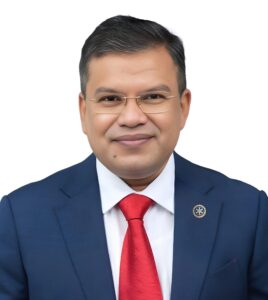
Dr. Fakhrul Islam Babu
President, China Bangladesh Friendship Center-CBFC
President, Asian Club Limited